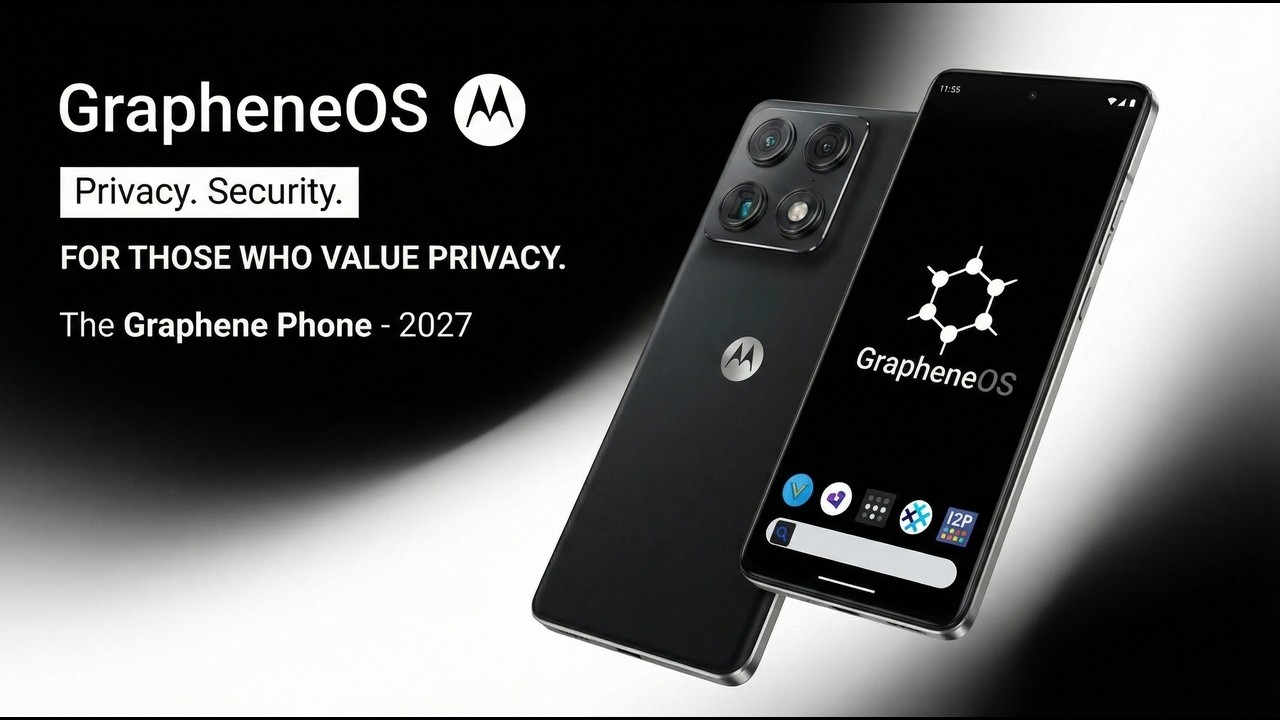
In a major development for the mobile privacy ecosystem, Motorola has officially announced a long-term partnership with the GrapheneOS Foundation to bring the security-focused operating system to a future Motorola smartphone. The announcement was made during Mobile World Congress (MWC) in Barcelona, marking one of the most significant milestones in the history of GrapheneOS.
For years, GrapheneOS has been limited to a single hardware platform—Google’s Pixel devices. The Motorola collaboration represents the first time a major smartphone manufacturer will build hardware specifically designed to support the operating system’s strict security requirements.
From Rumors to Official Confirmation
Speculation about a potential hardware partnership began in October 2024, when GrapheneOS hinted on social media that it was working with a “major Android OEM.” The identity of this partner remained undisclosed for months, leading to widespread discussion in the privacy and security community.
In February 2026, the situation escalated when an internal Motorola presentation slide surfaced on Reddit, showing GrapheneOS listed among Motorola’s security initiatives. Although the post was quickly removed, screenshots circulated widely online.
Shortly afterward, during Mobile World Congress, Motorola confirmed the rumors: the company and the GrapheneOS Foundation are collaborating to develop a new smartphone that will ship with GrapheneOS pre-installed.
The device is expected to launch in late 2026 or early 2027, according to statements surrounding the announcement.
Why the Partnership Matters
GrapheneOS is a privacy- and security-focused mobile operating system based on the Android Open Source Project (AOSP). It aims to harden the Android platform through additional security protections, stronger sandboxing, and stricter hardware requirements.
Until now, GrapheneOS has only supported Google Pixel devices, because they were the only widely available smartphones that met its hardware security standards.
This dependence created a potential risk: if Google were to restrict bootloader unlocking on Pixel devices, GrapheneOS could lose its primary hardware platform.
The Motorola partnership changes that dynamic.
Having a second hardware partner reduces reliance on a single manufacturer and strengthens the long-term sustainability of the project. It also signals growing industry interest in privacy-focused mobile platforms.
Strict Hardware Security Requirements
GrapheneOS maintains unusually demanding hardware requirements for devices that run its operating system. These include:
- Hardware root of trust, such as a secure element comparable to Google’s Titan M2 chip
- Verified boot with user-controlled keys, ensuring the operating system cannot be silently modified
- Hardware-backed brute-force protection, often implemented through Weaver tokens in a secure element
- Hardware memory tagging for advanced exploit mitigation
- Inline disk encryption with wrapped keys
- Unlockable bootloader to allow installation of the operating system
Because of these requirements, many Android manufacturers—including Samsung—have historically been unable or unwilling to support GrapheneOS.
Motorola’s willingness to build a device that satisfies these standards is therefore significant.
New Hardware Designed for GrapheneOS
The upcoming Motorola device will reportedly use a flagship Snapdragon chipset, potentially the Snapdragon 8 Elite Gen 5, alongside custom hardware components designed to support GrapheneOS’s hardened kernel and sandboxing features.
According to available information, none of Motorola’s current smartphones meet GrapheneOS hardware requirements, meaning the device will be built specifically for this purpose.
Development between the companies has reportedly been ongoing since June 2025.
Enterprise Security and Privacy Features
Motorola also announced additional security initiatives at Mobile World Congress that highlight a broader focus on privacy and enterprise security.
Private Image Data
A new feature within Motorola’s Moto Secure application will automatically remove metadata from photos before they are shared. This includes:
- GPS coordinates
- Device identifiers
- Other embedded metadata
Since photos often contain location data by default, automatic stripping can help reduce unintended information leaks when images are shared online.
Moto Analytics
Motorola also introduced Moto Analytics, an enterprise fleet management platform integrated with Lenovo’s ThinkShield security ecosystem. The platform is designed to give organizations more control and visibility over company devices.
The upcoming GrapheneOS phone is expected to integrate with ThinkShield, potentially making it attractive for businesses requiring hardened mobile devices.
Growing Demand for Privacy-Focused Smartphones
The announcement comes at a time when concerns about mobile privacy, device control, and platform restrictions are increasing.
Recent industry developments include:
- Increasing device lockdown measures by some manufacturers
- Growing debates about user identity verification and data collection in mobile ecosystems
- Restrictions on bootloader unlocking or sideloading on certain devices
Against this backdrop, the Motorola–GrapheneOS partnership offers a rare example of a large manufacturer moving toward greater user control and security transparency.
GrapheneOS: An Independent Open-Source Project
The GrapheneOS Foundation is a nonprofit organization based in Canada. The project is fully open source and funded primarily through donations, with no venture capital backing or government funding.
According to project estimates, GrapheneOS currently runs on roughly 400,000 active devices worldwide.
Until now, every one of those devices has been a Google Pixel phone.
The Motorola collaboration therefore represents a major step toward expanding the platform’s hardware ecosystem.
A Turning Point for Mobile Privacy?
If successful, the Motorola device could become the first smartphone designed specifically for GrapheneOS, rather than a device adapted to run it.
For privacy advocates and security researchers, the move signals a potential shift in the mobile market—one where user control, open-source verification, and hardware security play a larger role in device design.
As development progresses toward the expected 2026–2027 launch window, the partnership will likely be closely watched by the broader technology and cybersecurity communities.
It may also determine whether privacy-focused mobile operating systems can move beyond niche adoption and enter the mainstream smartphone market.